
Media & Publications
Our Media & Publications
We work to consistently build the relevant, niche knowledge and expertise to provide our clients and partners with exemplary service. Our ongoing ambition is to remain global leaders in our field, as well as relevant and important role players in the agricultural industry.
In ROOTED, the bi-annual publication compiled by the Group of Nurseries that we are part of, we share our take on new and existing research, the potential impact on operations and production, and the resultant impact on growers’ returns.



Our Blogs
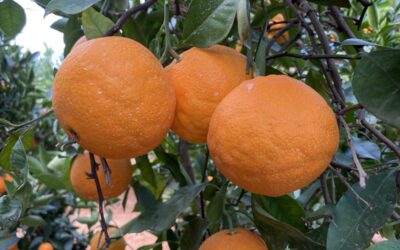
How to plant your new citrus orchard
Planting a new citrus orchard is a long-term investment that requires detailed planning to be done well in advance. Correctly planting trees is one of the most important steps to ensure an orchard gets established well. For new citrus growers, there are a lot of...
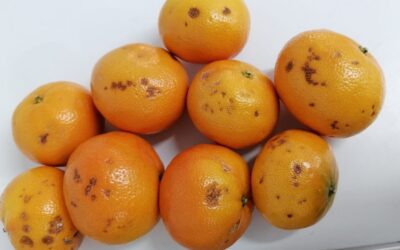
Nutrition and rind physiology – what you need to know
Rind disorders result from a complex interaction between fruit physiology, orchard management practices, environmental conditions, and post-harvest handling. Among these influences, mineral nutrition plays a fundamental role in determining how well the rind can withstand physical and physiological stress throughout the season. Read more about what balanced nutrition looks like
Alternate bearing in citrus – can it be managed?
One year the trees are loaded with fruit. The next, production drops dramatically. Sound familiar?
Alternate bearing remains one of the biggest challenges facing citrus growers, particularly in mandarins and easy peelers. The good news is that growers are not powerless against alternate bearing.
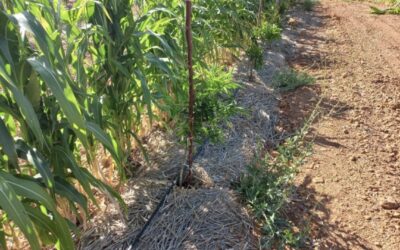
Q&A with a citrus grower on wind break successes
When it comes to curbing wind damage in young orchards, growers have several options – from installing artificial windbreaks to planting permanent and less permanent natural windbreaks. We spoke to a grower about his experience with maize plants as a temporary windbreak structure.
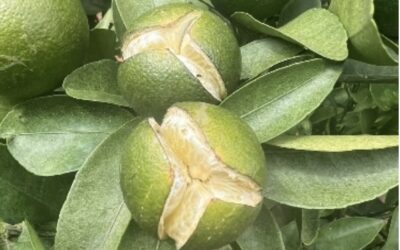
Understanding citrus fruit splitting – and what you can do about it
Pre-harvest splitting (PHS) is one of those frustrating issues in citrus production that can sneak up on you and cost you dearly. In some seasons, it can lead to yield losses of up to 30% in susceptible cultivars. While it’s complex and often climate-driven, there are...
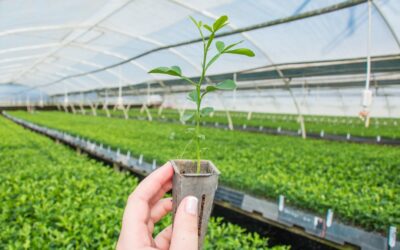
Choosing the correct rootstock
Selecting the correct citrus rootstock is one of the most critical decisions a grower can make. The right rootstock not only enhances fruit quality and yield but also mitigates soil and climatic challenges. This guide helps you make an informed decision on the best rootstock for your orchard.
The Citrus Grower’s Guide
What should I consider when choosing a citrus cultivar?
What is the difference between a citrus cultivar and a rootstock?
Think of a citrus tree as a two-part partnership:
- Variety (scion): The top part of the tree determines the fruit you will produce, including its flavour, size, colour, seedlessness and harvest timing. Examples include Nadorcott, Valencia and Eureka.
- Rootstock: The root system and lower trunk influences tree health, vigour, soil adaptability, water and nutrient uptake, and tolerance to certain pests, diseases and environmental conditions. In simple terms: the variety determines the fruit; the rootstock determines much of the tree’s foundation and performance.
Citrus rootstocks serve two essential functions. Firstly, they help overcome environmental limitations related to soil quality, water issues and climate conditions. Secondly, they improve the fruit’s marketability by affecting size, yield and internal quality. The longevity of a citrus orchard, typically 25 to 40 years, largely depends on choosing the right rootstock at the outset. If a rootstock proves unsatisfactory, the trees can be top-worked, however, this process delays production by at least two years.
For more detailed information on the different rootstocks, read ROOTED e-publication Issue 2.
How do I choose the right citrus rootstock: 5 factors to consider
- Climate analysis: Understanding the local climate is essential for choosing rootstocks with the right cold and drought tolerance
- Water quality and quantity: Conducting a water analysis ensures that rootstocks with appropriate tolerance to salinity and irrigation conditions are selected
- Soil classification and analysis: Soil type, pH and drainage influence rootstock performance. For example, calcareous or clay-heavy soils may not suit all rootstocks
- Disease presence: Nematodes and Phytophthora can devastate crops, so selecting disease-tolerant rootstocks is crucial
- Compatibility with scion cultivars: Some rootstock-scion combinations are incompatible, leading to stunted growth or other issues
What constitutes high-density planting in a citrus orchard?
High-density planting is an innovative farming technique that maximizes the use of soil, leading to increased profitability. By planting trees closer together, farmers can improve light, water, and fertilizer utilization, which boosts production. This method allows trees to grow larger, faster, and has become a cornerstone of advanced production systems.
Using a suitable cultivar and a dwarfing rootstock, farmers can achieve optimal planting densities for maximum yields. While the standard density is 555 trees per hectare (6 m x 3 m), some farmers have pushed this to 1,667 trees per hectare (6 m x 2 m x 2 m) to accelerate ROI. For long-term crops like citrus, it’s crucial to design planting densities that promote early high yields and establish sustainable long-term production units.
In a tramline design, tree rows are planted in pairs with narrower spacing than in conventional plantings. The trees are arranged in a triangular manner to maximize space usage. Choosing a less vigorous, more dwarfing rootstock helps ensure better penetration of pesticides and foliar sprays, facilitating a healthier tree canopy and earlier economic production.
What is the Citrus Improvement Scheme?
The Citrus Improvement Scheme was created to support the long-term profitability of citrus growers by ensuring access to top-quality citrus trees. Through strict certification systems, the CIS ensures that propagation material is true-to-cultivar and free from harmful pests and diseases. CRI operates as a non-profit organisation, while the Citrus Improvement Scheme functions as a self-sustained unit within CRI, providing independent oversight and assurance to the industry.
For more information
What is one of the most important considerations when establishing my new orchard?
Irrigation is the most critical factor for successful orchard establishment after planting. Farmers must ensure that the irrigation system is fully functional, and that water is applied in the right zone, at the correct time, and in suitable volumes.
For drip irrigation, place emitters within 10 cm of the tree’s trunk. This ensures water reaches the planting media (often coir) and penetrates the root zone. Due to the larger pore size of coir compared to the surrounding soil, water from the soil is unlikely to move into the coir—thus, targeted irrigation is essential.
Micro-sprinklers should also be placed 10–20 cm from the main trunk.
Drip-irrigated orchards typically require more frequent irrigation. In sandy soils during summer, daily irrigation may be necessary, while heavier soils (higher clay and silt percentage) may only require irrigation every second day. For micro-irrigation systems, intervals can be every 2–3 days, depending on the water-holding capacity of the soil.
* The above irrigation guidelines is only a theoretical recommendation, and field observations are essential.
For more information, read the full article here
How long does it take to produce a field-ready citrus tree?
coming soon
When should I order citrus trees for a new orchard?
coming soon
What size is a field-ready citrus tree?
coming soon